Flea Bites: How to Tell Fleas From Bed Bugs
Flea bites are small, itchy red marks that are easy to confuse with other bug bites, so identifying them correctly matters before you start treating your home. They usually show up in clusters and often point to a flea problem in pets, carpets, or nearby fabric.
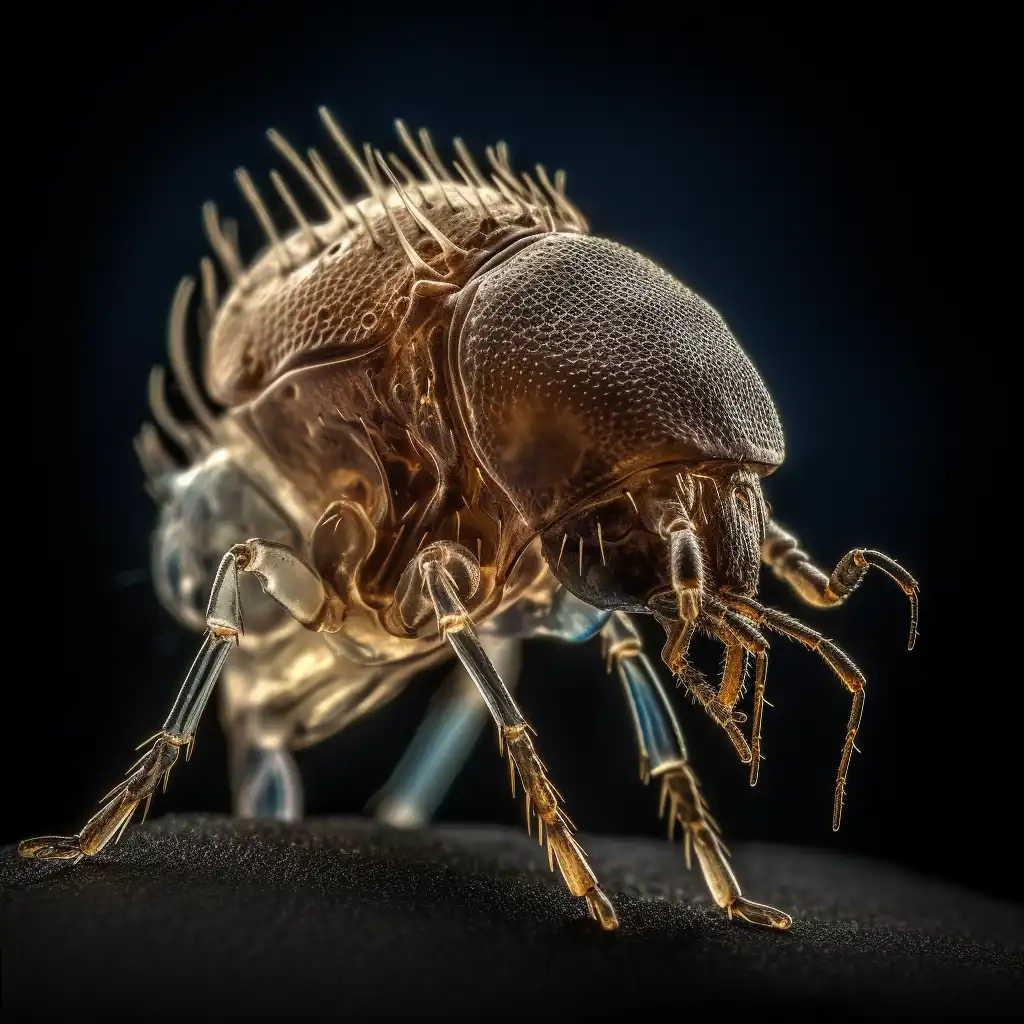
A flea shown under a microscope in great detail.
Flea bites are usually small red marks that itch and often show up in clusters or short lines. You will often notice them around the ankles, feet, and lower legs because fleas stay close to the floor and jump up from carpets or pets.
Bed bug bites can also appear in lines, but they are more likely to show up on arms, shoulders, neck, or other skin exposed while you sleep. Flea bites are often smaller and lower on the body, while bed bug bites are easier to notice after a night in bed.
If you know you are dealing with fleas, the cleanup plan is different from how to get rid of bed bugs. Treating pets, carpets, and fabric surfaces matters most, so identifying the right pest first can save time and frustration.
The Quick Check: Fleas or Bed Bugs?
Five differences settle most cases.
- Where the bites are. Fleas work from the floor up: ankles, feet, lower legs, sometimes the waistband. Bed bugs feed where skin is exposed during sleep: arms, shoulders, neck, back.
- When they happen. Flea bites can happen any time you are near infested carpet or pets. Bed bug bites are usually waiting for you when you wake up.
- The pattern. Fleas leave loose scattered clusters. Bed bugs more often leave neat rows of two or three.
- How they feel. A flea bite itches almost immediately, a small red dot with a slight halo. Bed bug reactions are often delayed, sometimes by days, and swell into larger welts.
- Whether you can spot the bug. Fleas are visible and they jump; watch your pet or your own socks. Bed bugs hide until you hunt for them.
The Paper Towel Test That Confirms Fleas
The fastest confirmation costs nothing. Stand your pet over a damp white paper towel and comb or ruffle their coat. If black specks fall onto the wet paper and smear reddish brown, that is flea dirt, which is digested blood, and you have fleas even if you never see one jump. A version of the same trick works on your floors: walk the carpet in long white socks. Fleas show up against the white as dark moving specks.
If your vet has checked the pets and found nothing, and the paper towel comes up clean, stop treating for fleas and keep reading.
If It Is Fleas
Treat every pet in the house the same week, with a vet-recommended product, because untreated pets reload the carpet. Wash pet bedding and your own in hot water and dry it on high. Vacuum every day for two weeks and empty the vacuum outside, since flea eggs and larvae live in carpet, not on the animal. A light layer of food grade bed bug dust along baseboards and under furniture works on fleas the same way it works on bed bugs, by drying them out as they cross it. Skip the foggers. Just like with bed bugs, they scatter the problem instead of solving it.
If It Is Not Fleas
When the vet says no fleas and the bites keep coming, work the list in order. Compare your marks against our bed bug bites guide and the photos of what bed bug bites look like. Rows of bites on skin that was covered by blankets, plus dark stains on sheets or mattress seams, point to bed bugs. If there is no flea evidence and no bed bug evidence, but birds, rodents, or other animals are part of the picture, read the reader cases on our mite bites page, where the answer kept turning out to be an animal source nobody had checked.
One more thing, because this page draws readers who have been fighting an unidentified biting problem for months. That fight wears people down, and doctors know it. If the stress is affecting your sleep, your mood, or how you feel about yourself, bring that up at your appointment too. And if you ever find yourself thinking about suicide, call or text 988, the Suicide and Crisis Lifeline, right away.
Reader Cases
Lara
“I am dealing with a mite infestation. We have a cat and two dogs. I spent hours this week combing my home trying to find something moving. I finally found one today that was biting my leg and put it between 2 pieces of tape to bring to my vet. My vet thought I was crazy but I insisted that he examine my specimen under a microscope. My suspicions were correct. It is some type of mite. The rat mite and bird mite look very similar so I am still trying to find some answers.”
Lara’s move is the one to copy. When nobody believes you, capture one. A piece of clear tape and a magnifying glass turn an argument into a diagnosis, and a vet or extension office can identify what you caught.
Kristin
“My husband and I are temporarily staying at my parents’ house, sleeping on an air mattress. About two weeks ago I woke up with a couple random bites and thought it was flea bites, since there are two dogs in and out of the house all the time. I bombed and sprayed everywhere and didn’t get another bite. Until today. I woke up with 4 sets of bites: a row on my upper thigh, a cluster on my stomach, and a couple on each arm. Mind you, I sleep in sweat pants and a t-shirt, so really only my arms are exposed. I have checked my bedding and my air mattress and nothing. Does this sound like bed bugs or something else?”
The details argue against fleas: bites in rows, on skin that was covered, appearing overnight, with treated dogs. That pattern says bed bugs until proven otherwise, and an air mattress on the floor is easy to reach. Check the seams and valve well, then the couch and baseboards nearby, and remember the fogger already used is the likely reason nothing is visible; it drives them into hiding without killing the eggs.
Still not sure which problem you have? Work through the bed bug inspection checklist tonight. Finding the evidence, or ruling it out, beats guessing.